Maven Trading Rules: Complete Guide to Prop Firm Challenges & Funded Accounts | Prop Funded Kings
Updated for 2025 — Complete Maven Trading Guide

Maven Trading Rules
Your Complete Guide to Passing the Prop Firm Challenge

Master every rule, concept, and strategy you need to conquer the Maven Trading prop firm challenge. From BOS trading and drawdown management to funded account scaling — we cover everything serious traders need to know.

2,500+
Traders Funded
94%
Pass Rate
$12M+
Payouts Processed
24/7
Expert Support

What is Maven Trading?

Everything you need to know about one of the fastest-growing proprietary trading firms in the industry.

If you’ve been searching for reliable information about Maven Trading, you’ve come to the right place. Maven Trading (sometimes spelled as Maven prop, Maven prop firm, or referenced as Maven prop trading) has rapidly established itself as one of the most competitive forex proprietary trading firms in the market today.

But what is Maven exactly? At its core, Maven Trading is a forex prop firm that provides skilled traders with the opportunity to trade large amounts of capital without risking their own money. Instead of funding your account with personal savings, Maven funding allows you to demonstrate your trading abilities through an evaluation process, and if successful, receive a funded account to trade with.

The platform — often referenced as maventrading in trader communities — operates on a simple but powerful premise: if you can trade profitably with discipline, we’ll provide the capital. This model has attracted thousands of traders worldwide who are looking for a legitimate pathway to professional trading without the massive personal financial risk traditionally required.

Maven Trading professional workspace with multiple monitors showing forex charts
Professional trading setup for Maven Trading challenges — multi-monitor workstation with MT5 charts

Why Traders Choose Maven Trading

Among the many trading prop firms available today, Maven markets has carved out a reputation for several key reasons:

💰

Competitive Pricing

Maven offers some of the most affordable evaluation fees in the industry, making it accessible for traders at every level. As a cheap prop firm option, it lowers the barrier to entry for aspiring funded traders.

📊

MT5 Platform Support

Prop firms forex MT5 compatibility ensures traders can use their preferred charting tools, EAs, and indicators. The platform is familiar to thousands of experienced forex traders globally.

Fast Funding

Once you pass the evaluation, Maven funded accounts are typically issued within 24-48 hours. This rapid turnaround means less waiting and more time to start trading profitably.

High Profit Split

Maven traders enjoy generous profit-sharing arrangements, often up to 80-90% of profits. This means the majority of your earnings stay in your pocket.

🛡️

Reliable Payouts

One of the most critical factors when choosing forex prop firms is payout reliability. Maven has built a solid reputation for consistent, timely withdrawals.

24/7 Support

Maven support is available around the clock through multiple channels, ensuring traders always have access to help when they need it most.

Whether you’re a beginner exploring forex proprietary trading for the first time or a seasoned professional looking to scale up, Maven Trading prop firm offers a structured pathway to trading with larger capital. The key to success lies in understanding their rules thoroughly — and that’s exactly what this guide will help you do.

Master Every Maven Trading Rule

Understanding these rules isn’t optional — it’s the difference between a funded account and a failed challenge.

Let’s get straight to the heart of what matters. Every prop firm has specific rules, and Maven Trading is no exception. Understanding these rules inside and out is absolutely critical before you even place your first trade. Many traders fail not because they lack skill, but because they violate a rule they didn’t fully understand.

Here’s a comprehensive breakdown of the Maven prop challenge rules and what you need to know about each one. Whether you’re preparing for your first evaluation or attempting a reset, this knowledge will give you a significant edge.

The Evaluation Phase Rules

The funded account challenge at Maven prop firm typically consists of one or two evaluation phases, depending on the account size you choose. Here’s what you need to achieve in each phase:

Rule Type Phase 1 Phase 2
Profit Target 8% of starting balance 5% of starting balance
Daily Drawdown 5% of starting balance 5% of starting balance
Maximum Drawdown 10% of starting balance 10% of starting balance
Minimum Trading Days 5 days 5 days
Maximum Time Limit Unlimited (no time limit) Unlimited (no time limit)
Minimum Lot Size 0.01 lots 0.01 lots
Consistency Rule Must trade on minimum days Must trade on minimum days

Note that these numbers can vary based on the specific Maven market account type you select. Always verify the current rules on their official platform before starting your challenge, as Maven news and updates may introduce changes.

⚠️ Critical Rule: The No-News Trading Restriction

Many traders overlook this crucial rule: Maven Trading typically restricts trading during high-impact news events for certain account types. This includes Non-Farm Payroll (NFP), CPI releases, FOMC announcements, and other tier-1 economic events. Violating this rule can result in immediate account termination, regardless of your profitability. Always check the Maven Trading prop firm economic calendar before placing trades around major announcements.

Prohibited Trading Practices

Like all reputable forex prop trading firms, Maven prop trading maintains strict guidelines about what trading practices are allowed. Understanding these restrictions will protect your account and your investment:

  • Arbitrage Trading: Latency arbitrage and any form of price arbitrage are strictly prohibited. Maven Trading uses advanced detection systems to identify arbitrage patterns.
  • High-Frequency Trading (HFT): Automated systems designed to exploit micro-price movements at extremely high frequencies are not permitted.
  • Copy Trading from Unverified Sources: While social trading may be allowed under specific conditions, copying trades from unverified or prohibited signal providers can lead to disqualification.
  • Reverse Trading / Hedging Across Accounts: Opening opposing positions across multiple accounts with the same firm is generally prohibited.
  • Abusive Trade Execution: Attempting to manipulate the evaluation system through intentional rule exploitation is grounds for immediate termination.

The key takeaway here is simple: trade with integrity. Forex prop trading at Maven funded is designed to identify genuine trading talent, not loophole exploiters. Focus on developing a consistent, rule-abiding strategy, and you’ll be well on your way to securing a funded account.

What is Drawdown in Trading?

The single most important risk metric you must master to pass any prop firm challenge.

If there’s one concept that every aspiring Maven trader must understand deeply, it’s what is drawdown in trading. This isn’t just academic knowledge — your entire funded account depends on your ability to manage drawdown effectively.

Drawdown in trading refers to the decline in your account balance from its peak value, measured as a percentage. For example, if your account reaches a high of $10,000 and then drops to $9,500, you’ve experienced a 5% drawdown. While drawdowns are a natural part of trading, prop firms like Maven Trading set strict limits to ensure traders maintain disciplined risk management.

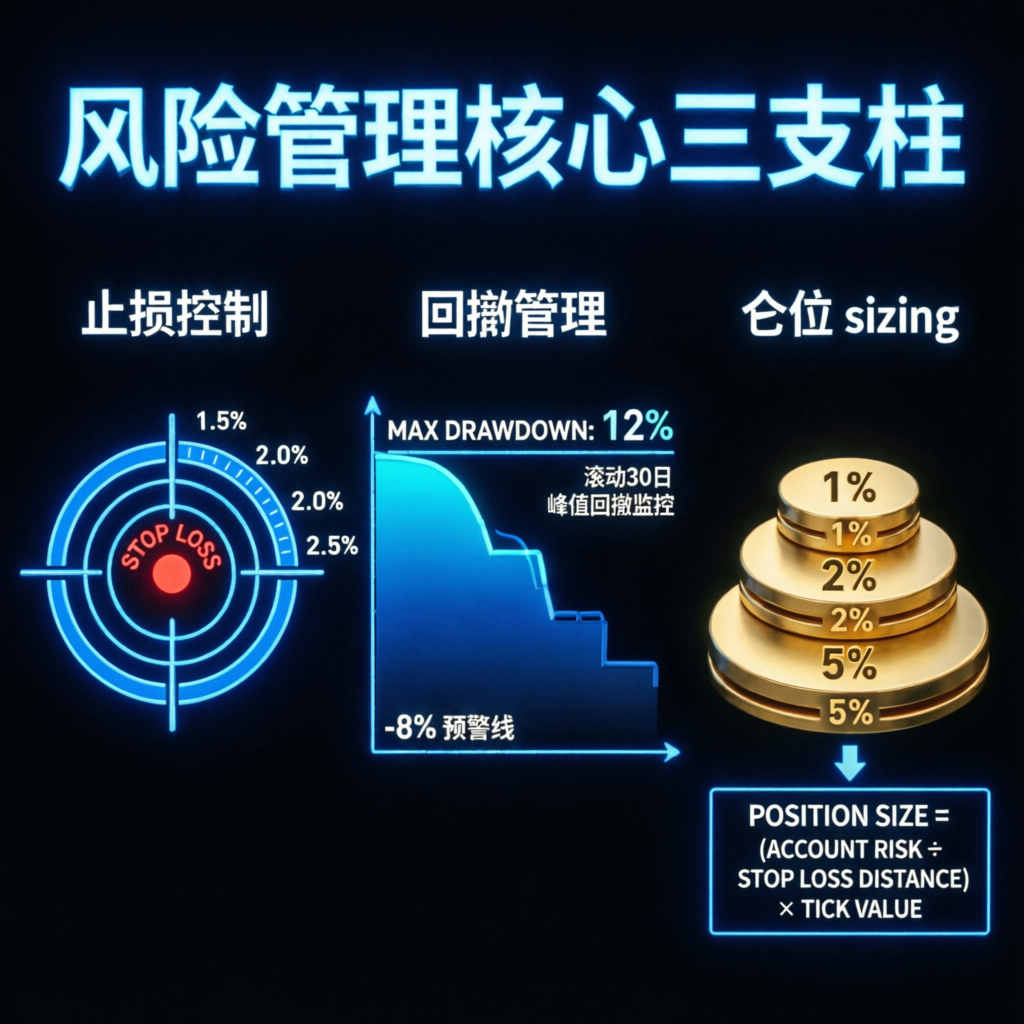
Risk management three pillars: stop loss, drawdown management, and position sizing
The three pillars of risk management every funded trader must master

Types of Drawdown in Prop Trading

Understanding the different types of drawdown is essential for navigating Maven prop firm rules successfully:

📉

Static Drawdown

The drawdown limit remains fixed at a specific dollar amount throughout your trading journey. For a $100,000 account with a 10% static drawdown, your account is terminated if equity falls below $90,000 — regardless of profits earned.

Trailing Drawdown

Trailing drawdown is more dynamic and challenging. As your account balance increases, the drawdown limit “trails” upward. If you reach $105,000 on a $100,000 account with 10% trailing drawdown, your new stop-out level becomes $95,000.

🌅

End-of-Day Drawdown

Some forex prop firms calculate daily drawdown based on the account balance at the start of each trading day, rather than real-time equity. This gives traders slightly more flexibility during intraday volatility.

💡 Pro Tip: The 1% Rule

Never risk more than 1% of your account on a single trade. On a $100,000 Maven funded account, this means your maximum risk per trade should be $1,000. With a 5% daily drawdown limit ($5,000), you’d need to lose 5 trades in a single day before hitting your limit. This gives you a substantial buffer and prevents emotional, revenge trading from destroying your account.

Managing drawdown isn’t just about avoiding account termination — it’s about building sustainable trading habits. The best funded trading firms in the industry, including Maven prop trading, design their rules to reward traders who demonstrate consistent risk management over time.

BOS Trading — Break of Structure Explained

Understanding what is BOS is fundamental to reading market structure like a professional.

BOS trading has become one of the most popular concepts among modern forex traders, particularly those using Smart Money Concepts (SMC) and ICT methodologies. If you’re preparing for a Maven Trading challenge, mastering BOS identification will significantly improve your trade accuracy.

What does BOS stand for in trading? BOS stands for Break of Structure. It refers to the moment when price breaks beyond a previous significant swing high (in an uptrend) or swing low (in a downtrend), confirming that the prevailing trend is continuing. This is one of the most reliable forms of trend confirmation in price action analysis.

Trading strategy notebook with chart patterns, fair value gaps, support and resistance levels
Strategic planning with BOS identification, FVG zones, and key market structure levels

How to Identify a BOS (Break of Structure)

Identifying a BOS meaning correctly requires understanding market structure at multiple timeframes. Here’s a step-by-step approach:

  1. Identify the Current Trend: Look at the higher timeframe (4H or Daily) to determine whether the market is in an uptrend (making higher highs and higher lows) or a downtrend (making lower highs and lower lows).
  2. Mark Key Swing Points: Identify the most recent significant swing highs and swing lows on your chart.
  3. Watch for the Break: A BOS occurs when price closes beyond a previous swing high (bullish BOS) or swing low (bearish BOS).
  4. Confirm with Momentum: The break should be accompanied by strong momentum — a large candle with minimal wick rejection at the break point.
  5. Wait for Retest (Optional): Many traders wait for price to retest the broken level as new support/resistance before entering.

In the context of Maven prop trading, using BOS as part of your entry strategy can help you achieve the precision needed to hit profit targets while respecting drawdown limits. The key is combining BOS with proper risk management — never risking more than 1-2% per trade, regardless of how strong the setup appears.

Many successful Maven traders combine BOS identification with other SMC concepts like order blocks, liquidity sweeps, and fair value gap example setups for high-probability trade entries. This multi-layered approach to analysis is what separates consistently profitable traders from those who struggle.

How Many Trading Days in a Year?

A critical metric every prop trader must know for planning and strategy.

One of the most commonly searched questions among traders is: how many trading days in a year? This seemingly simple question has important implications for your trading strategy, goal setting, and performance evaluation — especially when you’re navigating a Maven Trading prop firm challenge.

Stock Market Trading Days

For stock markets (NYSE, NASDAQ), there are typically 252 stock trading days in a year. This number excludes weekends (104 days) and approximately 9-11 public holidays. The exact number varies slightly from year to year based on the calendar — for example, how many trading days in 2025 is approximately 252-253 depending on holiday scheduling.

Forex Market Trading Days

The forex market operates differently. Since forex trades 24 hours a day, 5 days a week, the number of trading days in a year for forex is approximately 260 days (52 weeks × 5 trading days). This gives forex traders significantly more opportunities compared to stock traders.

Market Trading Days/Year Trading Hours
Stock Market (NYSE/NASDAQ) ~252 days 9:30 AM – 4:00 PM EST
Forex Market ~260 days 24/5 (Sun 5PM – Fri 5PM EST)
Futures Market ~252 days Varies by contract
Cryptocurrency 365 days 24/7

Understanding how many trading days in the year helps you plan your Maven prop challenge more effectively. If your minimum trading day requirement is 5 days and you have unlimited time, you can afford to wait for only the highest-quality setups rather than forcing trades on mediocre days. This patience is exactly what the best forex prop trading firms reward.

Remember: how many trading days are there isn’t just about the total number — it’s about maximizing the quality of the days you do trade. A trader who makes quality decisions on 50 well-chosen trading days will far outperform one who trades recklessly on all 260 available days.

What is a Funded Account in Trading?

The gateway to professional trading without risking your own capital.

What is a funded account — and why does it matter so much in the world of forex proprietary trading firms? Let’s break it down in plain terms.

A funded account in trading is an account provided by a proprietary trading firm that contains the firm’s capital, not your personal money. As a trader, you manage this account and keep a significant percentage of the profits you generate — typically 80-90%. The firm covers any losses, within the drawdown limits they set.

This is different from traditional trading where you risk your own money. With funded forex accounts, you’re essentially being hired to trade on behalf of the firm. If you prove you have the skill and discipline, you get paid for your performance. It’s that straightforward.

What is a funded trading account at Maven Trading specifically? It’s your reward for successfully passing their evaluation challenge. Once funded, you’ll have access to capital ranging from $5,000 to $200,000+ (depending on the account tier), with profit splits that can reach up to 90%.

Funded Trading Account Certificate - premium gold and dark design with crown

Types of Funded Accounts Available

The forex propfirm industry offers several types of funded account models. Understanding each will help you choose the right path for your trading style:

🎯

Evaluation-Based Accounts

The most common model. You pass a challenge (like Maven funded), then receive a funded account. This is the standard model used by most fx prop firms.

Instant Funded Accounts

Some firms offer instant funded account options with no evaluation phase. These typically have lower profit splits and smaller account sizes but provide immediate access to trading capital.

Scaling Plans

Many prop trading firms offer scaling plans where consistent profitability leads to account size increases. Maven prop firm may offer scaling options for consistently profitable traders.

Whether you’re looking for a traditional evaluation challenge or an instant funded account, the principles remain the same: discipline, risk management, and consistency. These are the qualities that separate funded traders from the rest of the pack.

Risk Management for Prop Firm Trading

The difference between traders who pass and traders who fail comes down to one thing: risk management.

If you take only one thing from this entire guide, let it be this: risk management is everything in prop firm trading. You can have the best strategy in the world, but without proper risk management, you’ll blow your account before you ever reach profitability.

At Prop Funded Kings, we’ve helped thousands of traders pass their Maven Trading challenges. The pattern we see is consistent — the traders who succeed are not necessarily the ones with the highest win rates. They’re the ones with the best risk management.

The Risk Management Framework

Here’s the risk management framework we recommend for every Maven prop trading challenge:

1

Maximum 1% Risk Per Trade

On a $100,000 account, this means $1,000 maximum risk per trade. This ensures you can absorb a string of losses without approaching your drawdown limit. Even 5 consecutive losing trades would only represent 5% of your account.

2

Daily Loss Limit of 2-3%

Set a personal daily loss limit well below the firm’s daily drawdown limit. If Maven prop firm allows 5% daily drawdown, stop trading for the day at 2-3% loss. This creates a safety buffer.

3

Position Sizing Formula

Always calculate position size based on your stop loss distance: Position Size = (Account Risk $) ÷ (Stop Loss Distance in pips × Pip Value). Never guess your lot size.

4

Correlation Awareness

Don’t overexpose yourself to correlated pairs. If you’re long EUR/USD and long GBP/USD, you’re effectively doubling your risk on USD weakness. Keep total correlated exposure within your risk limits.

5

Maximum Open Trades

Limit the number of simultaneous open positions. For most traders, 3-5 open trades is the maximum manageable number. Quality over quantity always wins in forex funding prop firms.

6

Weekly Review & Reset

At the end of each week, review your trades, analyze what worked and what didn’t, and reset mentally. This prevents emotional carryover and keeps your decision-making sharp.

🧠 The Psychology of Risk

Risk management isn’t just mathematical — it’s deeply psychological. When you know exactly how much you’re risking on each trade, you trade with confidence. When you’re uncertain about your risk, fear creeps in, and fear leads to poor decisions: holding losers too long, cutting winners too early, revenge trading after losses. At Prop Funded Kings, we train traders to develop the mental discipline that makes proper risk management automatic, not forced.

This framework applies whether you’re trading with Maven Trading, Marvin prop firm (sometimes misspelled as Marven, Mavern, or Meaven), or any other prop firm. The rules of risk management are universal — only the specific numbers change from firm to firm.

Strategies to Pass Your Prop Firm Challenge

Battle-tested strategies that have helped thousands of traders secure their funded accounts.

Now let’s talk about what actually works. You’ve read about the rules, you understand drawdown, and you know what is BOS. But how do you put all of this together into a strategy that consistently passes the Maven funded challenge? Here are the strategies we recommend:

Professional forex trader analyzing charts at modern office desk
Professional funded traders use structured strategies and disciplined execution

Strategy 1: The Sniper Approach

The sniper approach is about quality over quantity. Instead of taking dozens of mediocre trades, you wait patiently for only the highest-probability setups. This approach is particularly effective for Maven prop firm challenges because:

  • Lower transaction costs: Fewer trades mean less spread and commission drag on your account.
  • Reduced emotional fatigue: Making fewer decisions reduces the chance of emotional errors.
  • Higher win rate: By being selective, each trade you take has a higher probability of success.
  • Easier drawdown management: Fewer open positions means less simultaneous risk exposure.

Many of the most successful Maven traders use this approach, taking only 2-3 trades per week but with a high win rate and favorable risk-to-reward ratios (typically 1:2 or better).

Strategy 2: The Session-Based Approach

This strategy focuses on trading specific market sessions where volatility and liquidity are optimal. For forex traders using Maven forex accounts, the most popular sessions are:

  • London Session (3:00 AM – 12:00 PM EST): Highest volatility, excellent for GBP and EUR pairs.
  • New York Session (8:00 AM – 5:00 PM EST): High liquidity, ideal for USD pairs and indices.
  • London-New York Overlap (8:00 AM – 12:00 PM EST): Peak trading activity with the best opportunities.

By restricting your trading to these high-probability windows, you increase your edge significantly. This is especially useful when combined with the scalping vs day trading debate — session-based trading can incorporate elements of both approaches.

Strategy 3: The SMC/ICT Approach

Smart Money Concepts (SMC) and ICT methodologies have gained enormous popularity in the forex prop trading firms community. This approach focuses on:

  • Order Blocks: Areas where institutional orders are believed to be clustered.
  • Fair Value Gaps (FVG): Imbalance zones where price may return to fill the gap.
  • Liquidity Sweeps: Price movements designed to trigger stop losses before reversing.
  • Break of Structure (BOS): Trend confirmation through structure breaks.

This methodology requires significant study but can produce exceptional results when mastered. Many traders who pass Maven Trading challenges on their first attempt are SMC practitioners.

Remember: No Strategy is Perfect

Every strategy will have losing streaks. The key isn’t finding a strategy that never loses — it’s finding a strategy where your winners consistently outweigh your losers over time. Focus on positive expectancy: (Win Rate × Average Win) > (Loss Rate × Average Loss). If your strategy has positive expectancy and you manage risk properly, you will pass the funded account challenge.

Scalping vs Day Trading — Which is Better for Prop Firms?

Understanding the differences to choose the right approach for your Maven Trading challenge.

One of the most common questions we receive at Prop Funded Kings is about scalping vs day trading — which approach is better suited for prop firm challenges? The honest answer: it depends on your personality, skill level, and the specific rules of the firm you’re trading with.

Factor Scalping Day Trading
Timeframe 1-5 minute charts 15 min – 1 hour charts
Hold Time Seconds to minutes Minutes to hours
Trades Per Day 10-50+ trades 1-5 trades
Risk Per Trade 0.25-0.5% 1-2%
Win Rate Needed 55-70% 45-60%
Spread Impact Very High Moderate
Best For Fast decision-makers Patient analysts
Prop Firm Friendly ⚠️ Check rules ✅ Generally allowed

Important note: Some prop firms forex have specific rules about scalping. Maven Trading may have restrictions on extremely short-term trading strategies. Always verify the current rules before committing to a scalping approach.

Our recommendation for most Maven prop trading candidates: day trading offers the best balance of opportunity and risk management. It provides enough trade frequency to reach profit targets without the intense pressure and spread costs of scalping. Additionally, day trading allows for more thorough analysis of each setup, leading to better-informed decisions.

That said, if you’re an experienced scalper with a proven track record, by all means use your strengths. The best approach is always the one that aligns with your natural trading style and temperament. Just ensure you’re meeting all the Maven Trading rules while doing so.

Fair Value Gap Example — How to Trade FVGs

A practical guide to identifying and trading Fair Value Gaps for higher probability setups.

A fair value gap example is one of the most powerful concepts in modern price action trading. Also known as an “imbalance” or “inefficiency,” a Fair Value Gap (FVG) represents an area on the chart where price moved so quickly that it left an unfilled zone — a gap between what buyers and sellers consider “fair value.”

What Does a Fair Value Gap Look Like?

A Fair Value Gap is identified using a three-candle pattern:

  1. Candle 1: Establishes the initial move with a clear wick at the top (for bullish) or bottom (for bearish).
  2. Candle 2: The large impulsive candle that creates the gap — its body should not overlap with the wicks of Candle 1 or Candle 3.
  3. Candle 3: Confirms the gap — its wick should not reach into the body of Candle 1.

The space between Candle 1’s wick and Candle 3’s wick (through Candle 2’s body) is the Fair Value Gap. Price has a statistical tendency to return to this zone and “fill” the gap before continuing its trend.

FVG Trading Strategy for Maven Challenges

Here’s how to use FVGs in your Maven prop challenge: After a BOS (Break of Structure) occurs, wait for price to retrace into the Fair Value Gap created by the breakout move. Enter at the FVG zone with a stop loss below/above the gap, targeting the next liquidity level or swing point. This setup often provides a risk-to-reward ratio of 1:2 or better, which is ideal for meeting Maven Trading profit targets while staying well within drawdown limits.

Many funded forex traders combine FVG identification with other SMC concepts like order blocks and liquidity sweeps for even higher-probability entries. The key is patience — not every FVG gets filled immediately, and not every FVG fill results in a successful trade. Use proper risk management on every setup, and the math will work in your favor over time.

Navigating the World of Forex Prop Trading Firms

How to choose the right prop firm and maximize your chances of getting funded.

The forex prop trading firms industry has exploded in recent years, with dozens of firms now competing for traders’ attention. From Maven Trading to Maven prop firm competitors, choosing the right firm is an important decision that can significantly impact your trading career.

When evaluating fx prop trading firms, consider these critical factors:

  • Reputation & Track Record: Look for firms with verified payout histories and positive community reviews. Maven Trading has built a solid reputation in the community.
  • Trading Rules: Evaluate drawdown limits, profit targets, minimum trading days, and restricted practices. More flexible rules generally mean better success rates.
  • Profit Split: Higher profit splits (80%+) mean you keep more of what you earn. Compare across propfirms to find the best deal.
  • Payout Frequency: Some firms pay weekly, others monthly. Faster payouts improve cash flow for active traders.
  • Platform Support: Ensure the firm supports your preferred platform (MT4, MT5, cTrader, etc.). Maven markets supports MT5.
  • Customer Support: Maven support quality can make a huge difference when you encounter issues during your challenge.
  • Scaling Opportunities: The best online prop trading firms offer account scaling for consistently profitable traders.
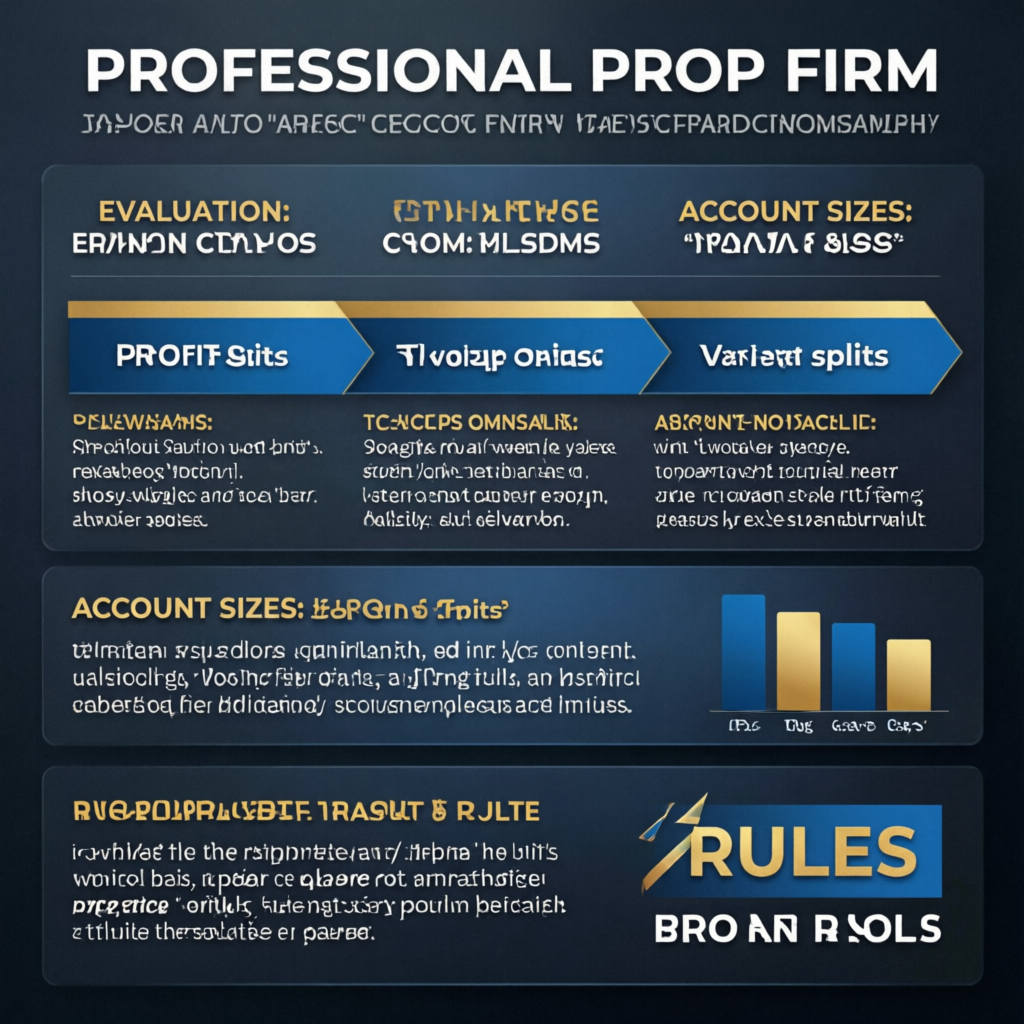
Professional prop firm comparison showing evaluation phases, profit splits, and account sizes
Key factors to compare when choosing between prop firms like Maven Trading

Whether you’re evaluating Maven Trading, Maven forex alternatives, or other prop firm options, the principles remain the same: choose a firm that aligns with your trading style, offers fair rules, and has a proven track record of paying its traders.

At Prop Funded Kings, we’ve worked with traders across all major forex funding prop firms. Our experience tells us that Maven Trading consistently ranks among the top choices for traders seeking a combination of fair rules, competitive pricing, and reliable payouts.

Prop Firm Passing Service — Get Expert Help

Struggling to pass your challenge? Our professional service can get you funded faster.

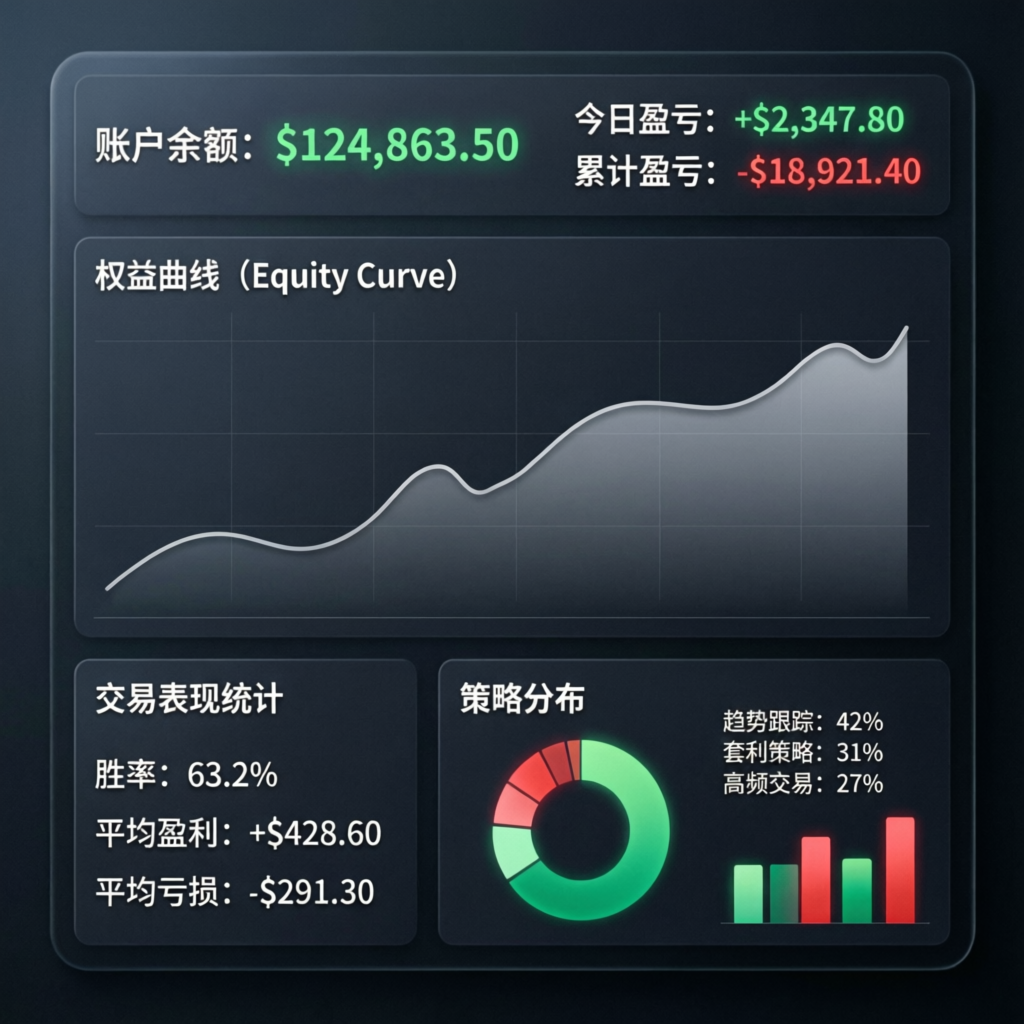
Trading dashboard showing account balance, equity curve, and performance metrics

Why Use a Passing Service?

Let’s be honest — not every trader passes their Maven prop firm challenge on the first try. In fact, industry statistics suggest that only about 10-15% of traders pass their evaluation without any assistance. If you’ve attempted the challenge multiple times without success, a professional prop firms passing service might be exactly what you need.

At Prop Funded Kings, our funded account management service provides experienced, professional traders who understand Maven Trading rules inside and out. We manage the challenge on your behalf, applying proven strategies and strict risk management to maximize your chances of success.

What Our Service Includes

Expert Challenge Management

Our professional traders handle your Maven Trading evaluation with proven strategies designed specifically for prop firm rules.

📊

Strict Risk Management

Every trade is managed with rigorous risk controls, ensuring drawdown limits are never approached dangerously.

📈

Funded Account Management

After passing, our funded account management service continues to help you grow and maintain your funded account profitably.

Secure & Confidential

Your identity and account details are fully protected. We operate with complete transparency and confidentiality.

Whether you need help with Maven Trading, other forex prop trading firms, or are exploring prop trading firms options, our team has the expertise to help you succeed. We’ve helped thousands of traders across all major fx prop firm platforms get funded and start earning.

🏆 Our Track Record Speaks for Itself

With a 94% pass rate and over 2,500 traders successfully funded, Prop Funded Kings is the trusted choice for prop firm services worldwide. Don’t waste more time and money on failed attempts — let our experts handle it for you.

Ready to Get Funded?

Stop struggling with failed challenges. Our expert team is ready to help you pass your Maven Trading challenge and start earning with a funded account today.

Secure Your Funded Account 🔓 Unlock Your Funded Account 🚀 Pass Your Prop Firm Challenge ⚡ Get Funded Faster

Maven Support & Essential Resources

Everything you need to navigate your Maven Trading journey successfully.

Navigating the world of prop firm trading can feel overwhelming at first, especially when you’re juggling evaluation rules, risk management, and strategy development all at once. That’s why understanding the support resources available through Maven Trading and the broader trading community is so important.

Maven Support Channels

Maven support is available through multiple channels to ensure traders always have access to assistance:

  • Live Chat: Available directly through the Maven log in portal for real-time assistance with account issues, rule questions, and technical support.
  • Email Support: For more detailed inquiries, Maven Trading provides email support with typically 24-hour response times.
  • Discord Community: Many Maven traders participate in community Discord servers where they share insights, strategies, and support.
  • Knowledge Base: Maven news and educational resources are regularly updated to keep traders informed about platform changes and best practices.

Common Maven Questions

Here are some of the most frequently asked questions about Maven Trading that we encounter at Prop Funded Kings:

Maven Free Trial

Many traders ask about a Maven free trial. While Maven Trading may offer promotional trials periodically, the standard evaluation requires a fee. Watch for special promotions and discount codes.

🔐

Maven Log In

Access your Maven log in dashboard through their official platform. The dashboard provides real-time tracking of your evaluation progress, drawdown status, and account metrics.

🗑️

Account Management

For questions like how to delete account from Maven Central or other account management tasks, contact Maven support directly through their help portal.

📊

Forex Tracking

Effective forex tracking is essential during your evaluation. Use a trading journal to record every trade, including entry/exit rationale, risk taken, and emotional state. This data is invaluable for improvement.

Additional Resources for Funded Traders

Beyond Maven support, there are numerous resources available to help you succeed as a funded forex trader:

  • Forex cheat sheet: Keep a quick-reference guide of currency pair characteristics, optimal trading sessions, and key economic indicators.
  • Prop firm match tools: Use comparison tools like prop firm match to find the best prop firm for your specific trading style and needs.
  • Economic calendars: Stay informed about high-impact news events that could affect your trades and potentially violate Maven Trading news trading restrictions.
  • Risk calculators: Use position size calculators to ensure you never exceed your planned risk per trade.

Remember, Maven Trading is just one option among many trading prop firms. Whether you choose Maven prop, explore other fx prop firms, or consider prop trading firms no eval options, the fundamental principles of trading success remain the same: discipline, risk management, and continuous learning.

The Funded Trader Journey

Essential Trading Knowledge Every Funded Trader Needs

Is Day Trading Gambling?

This is one of the most common questions from aspiring traders: is day trading gambling? The short answer is no — not when done correctly. However, the distinction between trading and gambling comes down to three critical factors:

  • Strategy & Edge: Gambling relies on chance. Trading relies on a proven edge — a strategy that produces positive expectancy over a large sample of trades. If you have a tested strategy with positive expectancy, you’re trading, not gambling.
  • Risk Management: Gamblers bet what they can afford to lose. Traders risk a precisely calculated percentage of their account on each trade. Proper forex prop trading never involves risking more than you can afford.
  • Emotional Control: Gambling is often driven by emotion and impulse. Professional trading is driven by discipline and a pre-defined plan. If you’re following a trading plan and managing risk, you’re not gambling.

Similarly, the question is intraday trading gambling follows the same logic. Intraday trading becomes gambling only when you abandon your strategy, overleverage, and trade emotionally. With proper education and discipline, intraday trading is a legitimate professional activity.

Is Forex Halal?

Another important topic for many traders is whether is forex halal. This question is particularly relevant for Muslim traders considering Maven Trading or other forex proprietary trading platforms.

Islamic scholars have different opinions on this matter. The general consensus among many scholars is that forex trading can be considered halal (permissible) if it meets certain conditions:

  • Trading must be spot-based (immediate exchange) without delayed settlement.
  • No interest (riba) should be involved — this means using swap-free (Islamic) accounts.
  • The trade must involve genuine exchange of currencies, not pure speculation.
  • Leverage should be within reasonable bounds as determined by Islamic finance principles.

Many forex prop trading firms, including Maven Trading, offer swap-free account options for Muslim traders. If this is important to you, be sure to check the available account types and consult with a knowledgeable Islamic finance advisor.

️ Disclaimer: The information provided on this page is for educational purposes only and does not constitute financial advice. Trading foreign exchange and other financial instruments carries substantial risk of loss. Past performance is not indicative of future results. Always conduct your own research and consult with a qualified financial advisor before making any trading decisions. Prop Funded Kings is not affiliated with Maven Trading or any other prop firm mentioned on this page.

The Funded Trading Account Ecosystem

The world of funded trading firms has created an entirely new ecosystem for retail traders. Instead of needing hundreds of thousands of dollars in personal capital to trade professionally, you can now access significant funding through forex proprietary trading firms like Maven funded.

This ecosystem includes not just the prop firms themselves, but also:

  • Educational platforms: Resources like this guide that help traders understand Maven Trading rules and develop effective strategies.
  • Passing services: Professional services like Prop Funded Kings that help traders navigate the evaluation process.
  • Account management: Forex account management services that help funded traders maintain and grow their accounts.
  • Community forums: Spaces where Maven traders and other prop traders share experiences and insights.

Whether you’re just starting to explore prop funding options or you’re an experienced trader looking to scale up, this ecosystem provides resources and support that simply didn’t exist a decade ago. Take advantage of these tools to accelerate your trading career.

Some traders also search for passed funded accounts for sale. While we don’t recommend purchasing pre-passed accounts (as this violates most propfirm terms of service and can result in account termination), the demand for such services highlights how valuable a funded account truly is. The right approach is to either pass the challenge yourself or use a legitimate prop firms passing service like Prop Funded Kings.

Other related searches we frequently encounter include propfirm forex, propform, propfirms, and propfirm — all variations of the same fundamental question: how do I access funded trading capital? The answer is consistent: find a reputable forex trading firm, understand their rules, develop a solid strategy, and either pass the challenge yourself or get professional help.

For those specifically interested in Maven, also known as mavne, mavne, maveb, mavenc, or meven (common misspellings), the process is the same: register, pay the evaluation fee, trade according to the rules, and earn your funded account. At Prop Funded Kings, we’re here to help you every step of the way.

Take the First Step Toward Your Funded Trading Career

Thousands of traders have already secured their funded accounts through Prop Funded Kings. Stop dreaming about trading with funded capital — make it your reality today.

💼 Funded Account Management Service 🔒 Secure Your Funded Account 🔓 Unlock Your Funded Account 🚀 Pass Your Prop Firm Challenge ⚡ Get Funded Faster

Frequently Asked Questions

Everything you need to know about Maven Trading Rules and funded account challenges.

Maven Trading is a forex proprietary trading firm that provides traders with funded accounts to trade the financial markets. Traders must pass an evaluation challenge by meeting specific profit targets while adhering to risk management rules, including daily and maximum drawdown limits. Once you pass the challenge, you receive a funded account where you can keep up to 80-90% of the profits you generate. Maven Trading prop firm is known for competitive pricing, MT5 support, and reliable payouts.
What does BOS stand for in trading? BOS stands for Break of Structure. It refers to a price action concept where the market breaks through a previous significant high (in an uptrend) or low (in a downtrend), confirming the continuation of a trend. BOS meaning is fundamental to Smart Money Concepts (SMC) and ICT trading methodologies. Many successful Maven traders use BOS as part of their entry strategy for the Maven prop challenge.
There are approximately 252 stock trading days in a year, excluding weekends and major holidays. For forex markets, which trade 24/5, the number is slightly higher — around 260 trading days per year. This matters for your Maven Trading challenge because understanding how many trading days in a year helps you plan your trading schedule and goal setting more effectively. For 2025 specifically, how many trading days in 2025 is approximately 252-253 for stock markets.
What is drawdown in trading? Drawdown refers to the reduction of your account balance from its peak value, measured as a percentage. It is a critical risk management metric that all prop firm traders must monitor. Maven Trading typically sets a 5% daily drawdown limit and a 10% maximum drawdown limit. Trailing drawdown is a variation where the drawdown limit follows your equity peak upward as you make profits.
What is a funded account? A funded account in trading is a trading account provided by a proprietary trading firm that allows traders to trade with the firm’s capital. After passing an evaluation phase, traders receive a funded account where they keep a percentage of profits (typically 80-90%) while the firm covers the losses. Maven funded accounts are among the most popular in the industry.
Is day trading gambling? Day trading is not gambling when done with a proper strategy, risk management, and trading plan. Unlike gambling, day trading involves analysis, probability assessment, and controlled risk. However, without proper education and discipline, day trading can become gambling-like behavior. The same applies to intraday tradingis intraday trading gambling? Only if you abandon your strategy and trade emotionally.
Is forex halal? The question is debated among Islamic scholars. Many scholars consider forex trading permissible (halal) if it involves immediate exchange (spot trading) without interest (swap-free accounts). However, trading with leverage or overnight swaps may be considered haram by some interpretations. Many forex prop trading firms, including Maven Trading, offer swap-free account options for Muslim traders.
A Fair Value Gap example: An FVG is a price action concept that occurs when there is an imbalance between buyers and sellers, creating a gap in the market structure. It appears as a three-candle pattern where the wick of the first candle does not overlap with the wick of the third candle, leaving a gap in the middle candle’s body. Traders use FVGs as potential support or resistance zones for entries. This concept is widely used by Maven traders preparing for their Maven prop trading challenges.
Trailing drawdown is a dynamic drawdown limit that adjusts upward as your account balance reaches new highs. Unlike a static drawdown, a trailing drawdown follows your equity peak, making it more challenging to maintain. Some prop firms forex use trailing drawdown models, while others use static or end-of-day drawdown calculations. Understanding which model your prop firm uses is essential for proper risk management.
To pass a prop firm challenge like Maven Trading, you need to: (1) Understand all trading rules including drawdown limits and profit targets, (2) Use proper risk management (risking 1-2% per trade), (3) Follow a proven trading strategy consistently, (4) Avoid overtrading and emotional decisions, (5) Consider professional passing services like Prop Funded Kings if you need additional support. Many traders benefit from our prop firms passing service and funded account management service.
Scroll to Top